
Powering Sport Decisions: Networks and Digital Data Transfer
Fiber optics, satellite transmission, and AI in match officiating: The VAR system and EI Towers case study
1. How “making decisions” in competitive sports is changing
Decision making in competitive sports is currently being radically transformed by both technology and innovation, two forces that are deeply connected. They fuel and accelerate each other, as technology provides tools and infrastructure that make innovation possible and innovation improves or creates new uses for existing technologies. This creates a cycle of progress in many sectors, including the competitive sports field.
1.1 The evolution of competitive sports
The historical relationship between sports and technology is a fascinating journey marked by continuous innovation and it has evolved in different dimensions: from how sports are performed and measured to how they are communicated and consumed by the public. This creates a cycle of innovation, shaping the experience of athletes, spectators and officials.
Even in ancient times, sports and technology were intertwined though in rudimentary forms. An example of this are the ancient Greeks, which used basic measuring devices during the Olympic Games to ensure fairness among competitors, such as:
- Odometre: a mechanism for accurate measurement of a road; it consisted of a box with co-operating screws and gearwheels attached to a moving vehicle;
- Sundial: it was used to measure the time between chariot races.
Figure 1 shows the odometre.
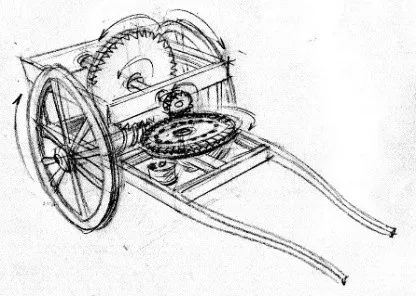
Figure 2 shows the sundial.

A significant turning point came with the Industrial Revolution in the 18th and 19th centuries: sports equipment began to be mass-produced, introducing standardization. The advent of the television in the mid-20th century transformed the way sports were consumed and measured by officials; broadcasting technology brought sports into living rooms globally, expanding fanbases and sports organizations’ revenue streams. The second half of the 20th century saw the rise of computer technology which enabled a more data-driven approach to sport performance and officiating. By the 1970s, sports analytics emerged and by the 1990s, teams were utilizing computer software to help athletes optimize their training, prevent injuries, improve their techniques, and optimize recovery time.
By leveraging the latest advancements in technology, coaches and trainers can help athletes to reach their full potential and to achieve their goals. High definition (HD), ultra high definition (UHD) television broadcasts and streaming platforms have significantly contributed to enhancing visual clarity, which allows fans to witness the action with unprecedented detail and allows to take decisions with more clarity and precision. Augmented Reality (AR) overlays graphics, statistics and other types of information onto the live broadcasts, offering a higher comprehensive understanding of the game and its nuances. Advance recovery tools, Virtual Reality (VR) training, and Global Positioning System (GPS) performance monitoring allow a higher performance for athlete; on the other hand video-assistant referee, hawk-eye and remote operations centre help officials to take decisions. Digital technologies introduced in this phase are characterized by their speed, ability to capture detailed data in real time and advanced processing capabilities. These systems can analyse, interpret and visualize information quickly which makes them particularly effective in supporting both performance and decision-making in sports.
The key factors transforming sports and the characteristics of technologies mentioned above are:
- Big Data: enables the processing and analysis of large datasets to identify patterns and make smarter decisions in real-time;
- Data transfer: enables the movement of collected data from IoT devices to servers, cloud platform or analysis tools that can be based on AI;
- Artificial Intelligence (AI): the ability of computers and machines to simulate human learning, comprehension, problem-solving, decision-making, creativity, and autonomy;
- Internet of Things (IoT): a network of sensors and devices embedded in physical objects that collect and share data.
Sport is arguably one of the most unpredictable industries in the world. It’s almost impossible to predict which team will win or how athletes will perform; it’s these unforeseeable factors that influence the demand. As it happens with other sectors, technology attracts major interest in sport as it has always been at the forefront of technological innovation, with the sports technology market expecting to reach a value of 40 billion dollars by 2026. It’s clear to see how technology is revolutionizing the way in which we play and experience sports; from advanced analytics and data visualization to assessment tools and streaming services, it has significantly changed the way in which we interact with and understand sports.
People make sport happen: it’s not just about performance and competition but it’s a human-centred activity, and without people sport would lose its meaning and purpose. It’s of fundamental importance to consider the key stakeholders and primary participants involved in the competitive sports industry:
- Athletes: the performers who compete;
- Spectators: the audience who watches;
- Officials: the people who enforce rules and regulations of the sport (umpires and referees).
These players are not only integrated, but they also operate in a system that maintain a functional balance among the various and distinct activities they perform. Their coordination contributes to the efficiency of the system without compromising their individual roles.
It can be stated that technology brings benefits as well as disadvantages to sport.
Figure 3 shows the advantages and disadvantages of technology for spectators.
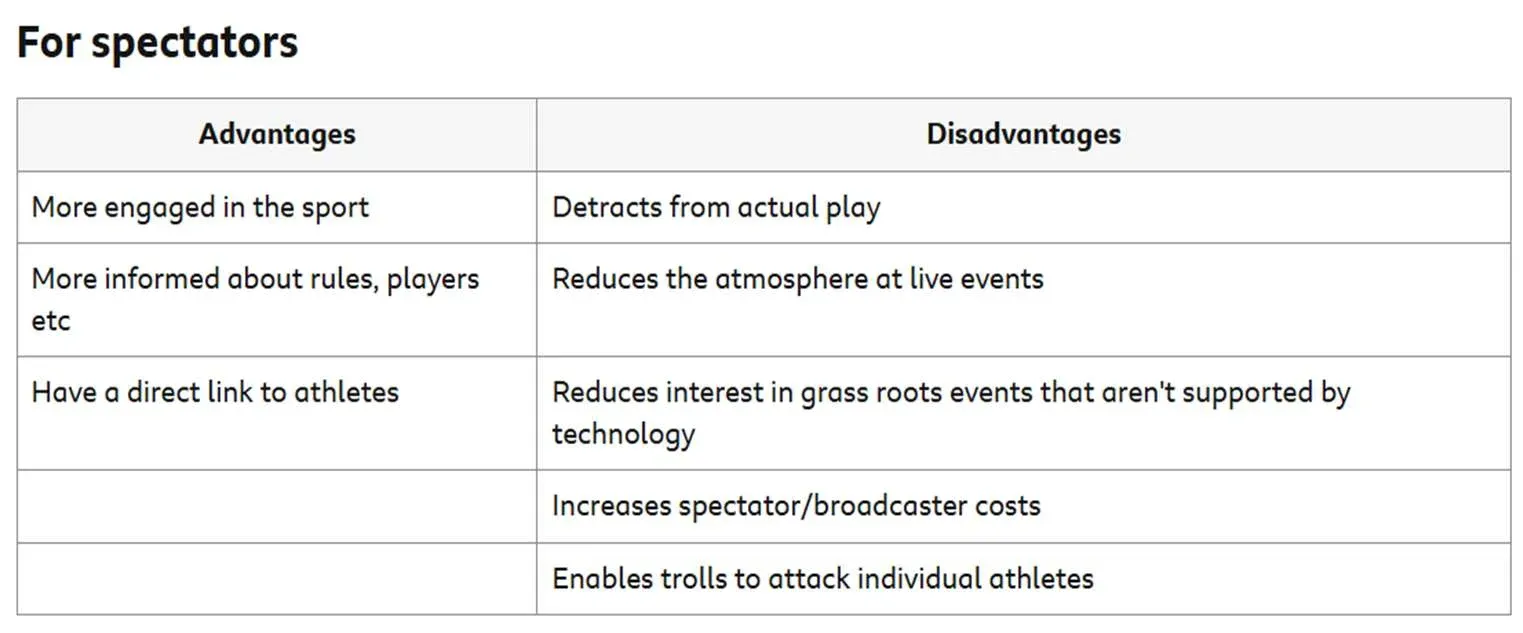
Figure 4 shows the advantages and disadvantages of technology for athletes.
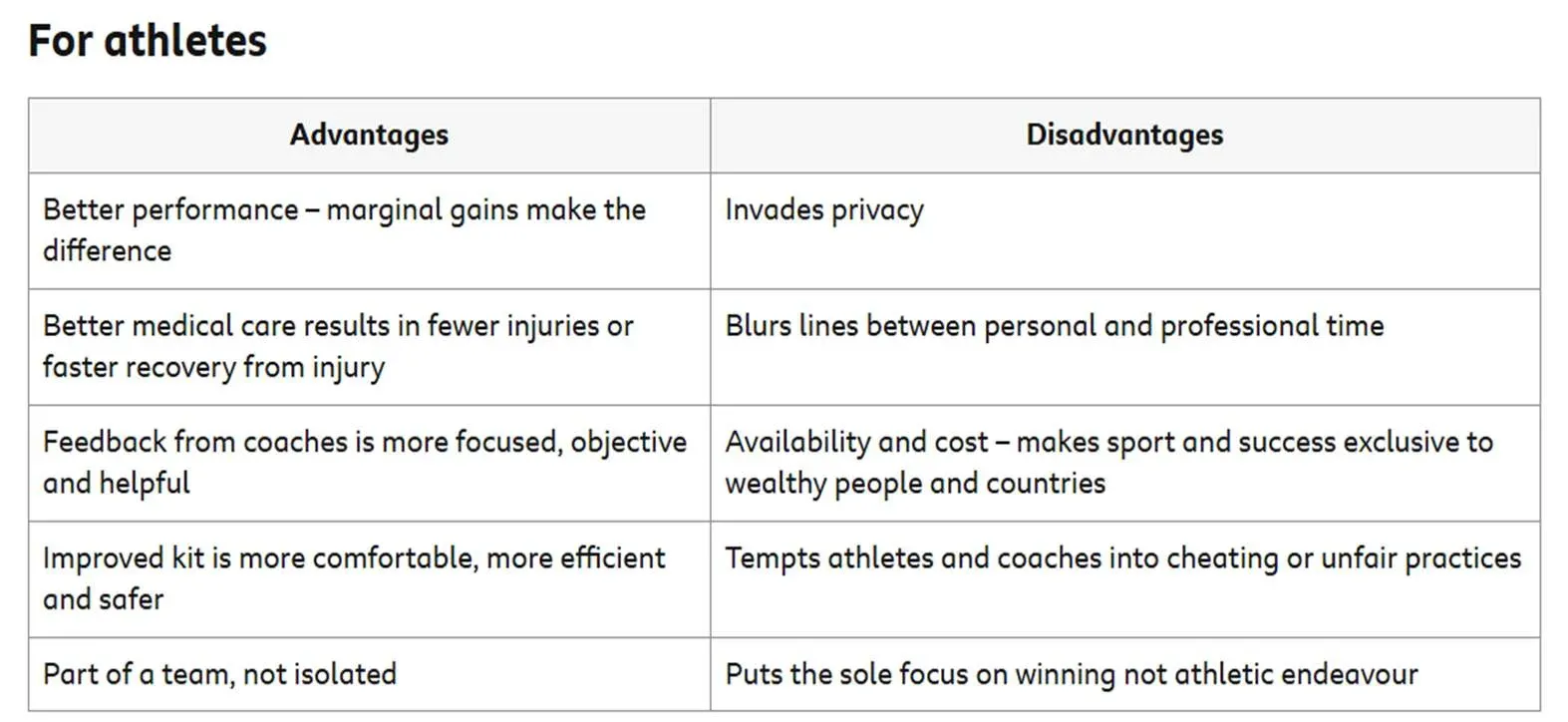
Technology allows athletes to have a better performance; access to data and advanced training, help athletes perform at their best. This can be the difference between winning and losing. Its advantages are often limited to those who can afford it; this creates inequality and can lead to a gap between athletes from rich and poor countries.
Technology makes it easier and more fun for fans to follow and understand sport: they can easily access rules and be more informed about players. However, a downside of this is that, on online platforms, athletes can be publicly criticized which may affect their mental health. In section 1.3 we’ll further discuss advantages and disadvantages of technology but this time for officials.
Rapid technological progress and digitalization have considerably changed the role of technology in sports over the past two decades; as human limits of performance have been surpassed in many disciplines, reaching future limits will increasingly depend on technology and its evolution. Technology has potentially contributed to making sports more exciting and challenging than ever before. While it was considered a leisure time activity for most of its history, technology-driven internationalization and professionalization have led to enormous changes: consumers can now follow sports events and their favourite teams and athletes across the globe live or on-demand at basically any time. Historically, sports had been governed and managed through a variety of primarily public or voluntary organizations with a limited number of professional or commercial institutions. Given the rapid advancements and growth in the industry over the past few decades, the pressure to adopt market mechanisms has constantly increased; an example of this are non-profit organizations that now have to be managed like the classic profit organizations and need to establish professional organizational structures and processes.
1.2 The importance of unequivocal decisions in sport officiating
In the world of sport, umpires and referees are sport officials. Umpires can be viewed as the game guardian, as in sports like baseball and tennis, for example they decide if a ball is in or out of bounds, a decision that can affect the game drastically. Referees, on the other hand, are the rule enforcers in sports like football and basketball, and their goal is to make sure that things don’t get too rough.
We see the first form of sport officials with the Hellanodikai, a word that can be interpreted as the “judges of Greece”; they were a mixture of our modern referees and the Olympic Organising Committee. They were in charge of many activities including selecting the athletes, upholding the rules, organising games, maintaining standards and deciding on sanctions if required. If athletes were discovered breaking any of the rules, the Hellanodikai would be entitled to use their rhabdos; a long wooden stick that could be used for physical punishment. Evidently, these practices are no longer used today, but the role they played is not very different from today’s officials. Sport officials are more than enforcers of the rules, they are stewards of sportsmanship.
They help foster a positive competitive environment where fairness and respect are upheld by doing the following things:
- Enforcing rules and codes of conduct: ensuring that games are played according to the established rules designed to promote fair play, respect and integrity;
- Teaching respect for opponent and the game: maintain order in a competitive environment and serve as educators who promote respect for the game and its players;
- Preventing escalation and conflict: in high-stakes games, their ability to manage emotions, keep the game under control and prevent situations from escalating into physical altercations is key to promoting a respectful and fair environment;
- Encouraging positive fan behaviour: if sport officials fail to control the game, fans may feel empowered to behave poorly, which can undermine the overall sportsmanship of the event.
Sport officials have a very challenging job due to the many aspects of a game or match that they must take into account:
- The speed (real-time) and complexity of the decisions they must make in high pressure situations;
- The repercussions that their actions may have on the course of a game and players;
- The number of people involved;
- The often hostile nature of spectators.
It’s part of their role to make sure that sports games follow their intended course and that justice is being done. They are required to evaluate and judge the actions that take place during the match, make fast decisions, manage the game, pay attention to its multiple aspects, keep order and solve disputes. All these factors not only make the job very complex, but also make it very easy to commit mistakes. As a consequence of their constant decision-making, subjectivity when assessing actions and their possible mistakes, they are often criticized. This may come from players and coaches as well as sports managers, fans or the media. The perceived factors influencing sport officials decision-making can be divided in four categories:
- Ideal decision-making factors: accuracy, error, regulations, professionalism;
- Individual factors: personality, concentration, control;
- Experience factors: experience and personal life;
- Situational factors: environmental factors and crowd factors.
When a controversial or incorrect call impacts a game, fans, players, and coaches often question the referee’s judgment. However, not all bad calls can be immediately addressed on the field, especially in situations where the game proceeds too quickly or technology isn’t available for specific actions. In these cases, they may address the incident post-game through their established accountability processes. When a significant error occurs, leagues may issue a reprimand or corrective action towards the referee involved; these corrective actions vary in severity, depending on the nature and impact of the mistake. In cases where a referee repeatedly makes mistakes, the league may mandate additional training that focuses on decision-making, positioning or rule interpretation; corrective actions may also include temporary reassignment to lower-stakes games. To reduce errors, leagues implement ongoing training programs that focus on rule updates, situational awareness, and effective communication. Many officials attend offseason training camps where they review new regulations, participate in simulations, and receive feedback from more experienced officials. In addition, leagues incorporate technological tools to assist referees in real-time and post-game evaluations. By addressing errors through internal reviews, corrective actions and public transparency, leagues strive to improve officiating quality and uphold games integrity. This process ensures that referees remain accountable, fosters trust among fans and players and provides pathways for continuous improvement in the officiating profession. Referees’ mistakes can have devastating consequences from an economical and social perspective for clubs and leagues, fans, athletes and the referees itself.
1.3 Impact of technology in sport officiating
In the 21st Century, the entire face of referees’ decisions in matches has changed drastically with the advancement of modern technologies. The international federations of various games are taking revolutionary steps to introduce technological advancements to assist their decisions in order to boost the interest of the players, audience and the games’ attractiveness. Sport has evolved at a rapid pace over the years; rules, regulations, equipment and facilities have changed to such an extent that the original format of many sports is completely different. It’s the responsibility of referees and umpires to update their knowledge from time to time to improve the standard of a game, fulfil the expectations and demands of spectators.
When we talk about technology in sport officiating we refer to any electronic device, or collection of devices, currently used to aid or assist the official in their officiating duties during a match in the chosen sport. This definition was extended to include devices that are also used by any third party officiating in the determination or application of rules and regulations of a particular match. Thanks to recent advancements in sensor technology, digital image processing and computing, technological tools for officiating are playing an increasingly important role in sports.
Some examples of technologies used:
- Video Assistant referee (VAR): plays a key role in enhancing referee accuracy by providing real-time reviews of crucial plays; It’s based on a video system that allows movements to be replayed and judgements to be confirmed or reviewed;
- Goal Line Technology: ensures fairness by providing precise and immediate confirmation of whether a ball has crossed or not the goal line;
- Hawk-Eye: assists with precise line-calling, reducing human error and helping referees make more informed decisions.
By integrating these technologies with Artificial Intelligence (AI), referees gain real-time insights that enhance the overall quality of the game. The role of referees has evolved significantly from its inception to the present day; these changes, which involve the integration of new technologies, have been long overdue in comparison to the digital transformation observed in other sports, particularly in light of the rapid advancements in machine learning and AI; the reliance on algorithms for officiating raises questions about accountability and transparency. The rapid integration of technology into sports has undeniably transformed the landscape of fair play, presenting both opportunities and challenges. Fair play is defined as when a match is played with the observance of rules, respect of the opponent, the non-violation of rules and the acceptance of the referee’s decisions. Technology plays a key role in this as it assists referees in providing a fair competition in the tournament.
The growing trend of using technology to complement or substitute human referees marks a transformative phase in sports. This shift is not just a response to the increasing demands for accuracy and fairness but also reflects the evolution of sports in the digital age. When used, technology provides a mechanism to ensure the correctness of decisions; the success of the introduction of decision support technology is dependant on its usability, appropriate application and acceptance by the officials and participants of the match. The diligent use and application of appropriate technologies can be used as an effective aid to refereeing: it promises to reduce human error and ensure more consistent and fair decisions. In the fast-paced world of competitive sports, even the most experienced referees can make mistakes; however, with the introduction of technology, the margin of error has been significantly reduced, allowing officials to make much more accurate decisions, especially in high-pressure situations. Subjective judgements from human umpires or referees are not seen as ideal as they are perceived to be unreliable, so technology is often introduced in order to assist with the provision of reliable and empirical data. This promotes a more attractive situation for both the spectators and the players due to the context being determined without illicit plays or tactics but rather on the athletic ability and performance of the participants.
However, this transition also brings challenges. In the pretechnological era, sports officials were bestowed with natural authority; with their extensive training and experience, umpires were considered the most suitable people to reliably judge the situation on the field. However, replays put the audience on par with the officials, at least in terms of viewing position, which has exposed referee’s mistakes. These mistakes have been, and often are, well-publicised, leading them risking losing their authority. Ethical guidelines and regulations must evolve to address emerging technologies to ensure fairness, transparency and the fundamental principles of sportsmanship. The introduction of professional referee organizations attempted to enhance consistency and enabled merit-based referee selections in order to maintain high levels of trust and respect toward referees. Despite technology minimizing human errors, referees continue to control games and facilitate player relationships; recently, their training is focused on effectively utilizing technological aids. Overall, the evolution of refereeing in sports reflects a balance between tradition and innovation, where the fundamental goal remains to uphold the spirit and integrity of the game while adapting to changing times and technologies.
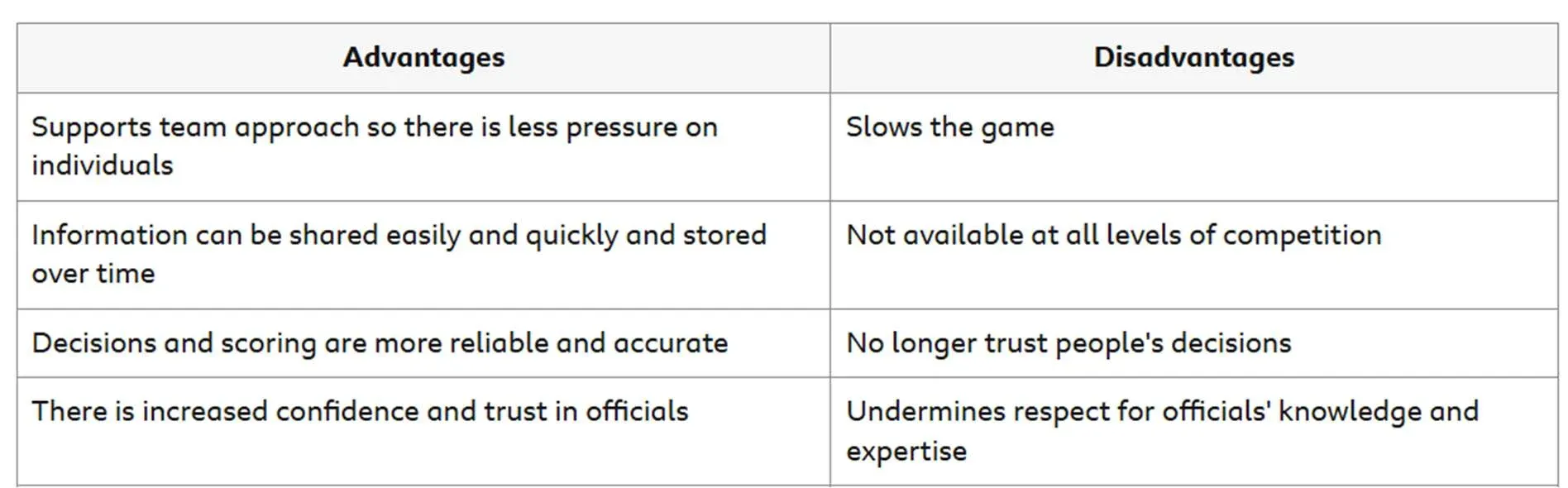
Technology has to be used as an aid in the management of the event rather than a tool to administer the rules and regulations during it. Despite technological support, the overall management of sports events must remain a human responsibility, as the role of referees is both essential and irreplaceable. Technology and human refereeing combine to form a hybrid system where both work together, leveraging their respective strengths, to produce the most accurate and effective outcomes. The referee should be the final arbitrator and cannot become dependent on technology; there will always be the need to interpret and assess an infraction based on the situation surrounding it, and this can’t be done purely using technology. If rule interpretation were to be administered using technology without the application of the referee’s knowledge, the overall flow of the competition would more than likely cease, and even the most minor, insignificant and unintentional infractions would be penalized. Reviewing footage for a decision may take time and it requires a brief suspension of the match, causing pauses that can disrupt the momentum and excitement of a match leading to frustrated players and spectators. In fast-paced sports like basketball or football, frequent stops can annoy players and fans, detracting from the live game experience. While technology aids in decision-making, some argue that it can lead to an over-reliance on tech, reducing the referee’s autonomy and judgment. Relying heavily on these systems it can diminish the human element of officiating which has historically been integral to sports. Implementing technology in officiating is often costly and can be challenging to set up, especially for smaller leagues and tournaments. This gap can create discrepancies in officiating quality between major leagues which can afford such systems, and minor leagues, which cannot. Technology is not infallible either. For one because it might distort perception and qualitative appraisal of rapid unfolding events (when events are shown in slow motion, they can look different than they did in real time) and for another because technology is only accurate to a certain extent, no technological system is perfect (sensors and cameras can fail or misread due to technical limitations)
Figure 5 summarise the advantages and disadvantages of technology in sport officiating:
I had the pleasure of interviewing Alessandro Ferrari, an international Race Director since 2009, with more than 1200 GT and Formula races directed in his career. His main goal is to ensure the smooth running and safety of the race. He holds both civil and criminal liability for each event he directs and, together with the race stewards, he decides on any penalties. The advent of new technologies have made it easier and faster to make decisions in his job. For example, in rally competitions where cars race over a distance of 200 km, technology such as GPS tracking systems allow instant awareness of a car’s location and status; if a crash occurs, the system immediately notifies him. This real-time insight enables rapid and informed decisions, such as dispatching medical assistance or adjusting the race route. Without such tools, these decisions would take much longer and involve more uncertainty. Ferrari explained that in high-level competition making the correct call is actually easier than in low-level competition; this is due to the greater availability of technology, which allows him to make more accurate decisions and reduces external pressure. From his point of view, the advancement in technology have also changed how fans perceive race control decisions. With greater access to data and behind the scenes information, spectators increasingly feel like Race Directors themselves, leading to a lower acceptance of officials’ decisions. A clear example of this was Formula 1 Michael Masi Race Director case in 2021. Masi made a decision that went against the established rules and favoured the spectacle of the race. At that time, his live radio communications with team principals were broadcasted on television, exposing him to intense political and psychological pressure which may have influenced his judgment. The Fédération Internationale de l’Automobile (FIA) president revealed that direct radio communications during the race will be removed in order to protect the Race Director from any pressure and allow them to take decisions peacefully. It will still be possible for team principals to ask questions to the Race Director but only according to a well-defined and non-intrusive process. Exposing officials through public communication can undermine the respect for their knowledge, expertise and authority. In extreme cases, such as after the Masi incident, public criticism even portrayed the FIA (the event organizer) as a corrupt organization, with some fans mocking the logo by replacing “FIA” with “Mafia”. Figure 6 shows the FIA and MAFIA logo.


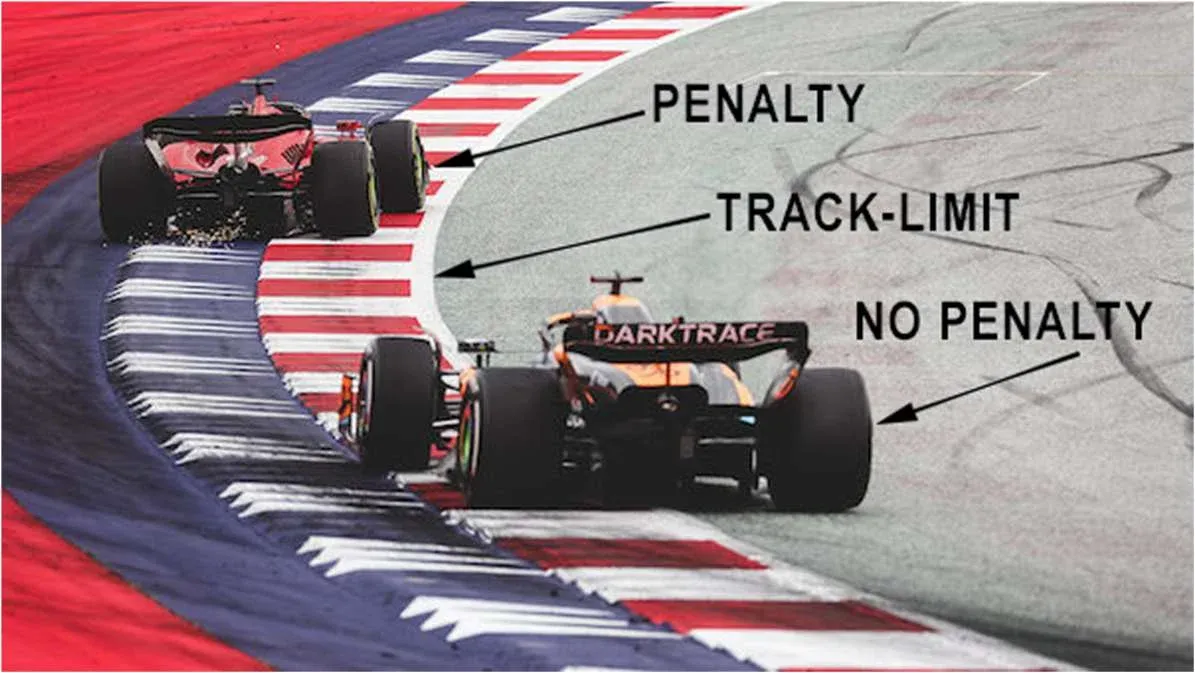
Track-limits refer to the defined boundary of a racing circuit that a driver must stay within during a race; it’s typically considered to be the white line on the edge of the racing surface before the curb.
Figure 7 shows car ahead exceeding track limits which leads to a penalty and the following car remaining within the track boundaries (no penalty)
Nowadays, track-limits are monitored with high-definition cameras that determine if a car is inside or outside the boundaries. Ferrari explained that decisions in motorsport should never be left entirely to computers or AI: while technology can support the process, the final decision must always be made by the Race Director. He emphasized that there are situations where one driver may force another one off the track; in such cases, penalizing the driver who went off would be unfair, the blame lies with the one who caused the incident. An automated system might not recognize this and could penalize the wrong driver; that’s why human oversight is essential. To stay up to date with evolving regulations and technological tools, Ferrari and others international Race Directors attend every year training courses in Geneva, where they learn how to apply the latest systems and rules in their work.
2. The role of data transfer technologies in sport decisions
In this chapter, I will use examples from football and the Video Assistant Referee (VAR), as I will analyse this case in more detail in the following chapter.
2.1 Data driven decision making in sport
Data in sport refers to the collection, analysis and interpretation of various types of information related to sports performance, athletes, teams, competitions and other relevant aspects of the sporting world. It can be gathered from a wide range of sources, including performance tracking devices, sensors, wearable technology, video analysis and historical records. Through data processing and transfer technologies, raw data points (which are individual pieces of unprocessed information that have been collected but not yet analysed) can be transformed into valuable insights that improve decision-making. Some of the most common types of data include:
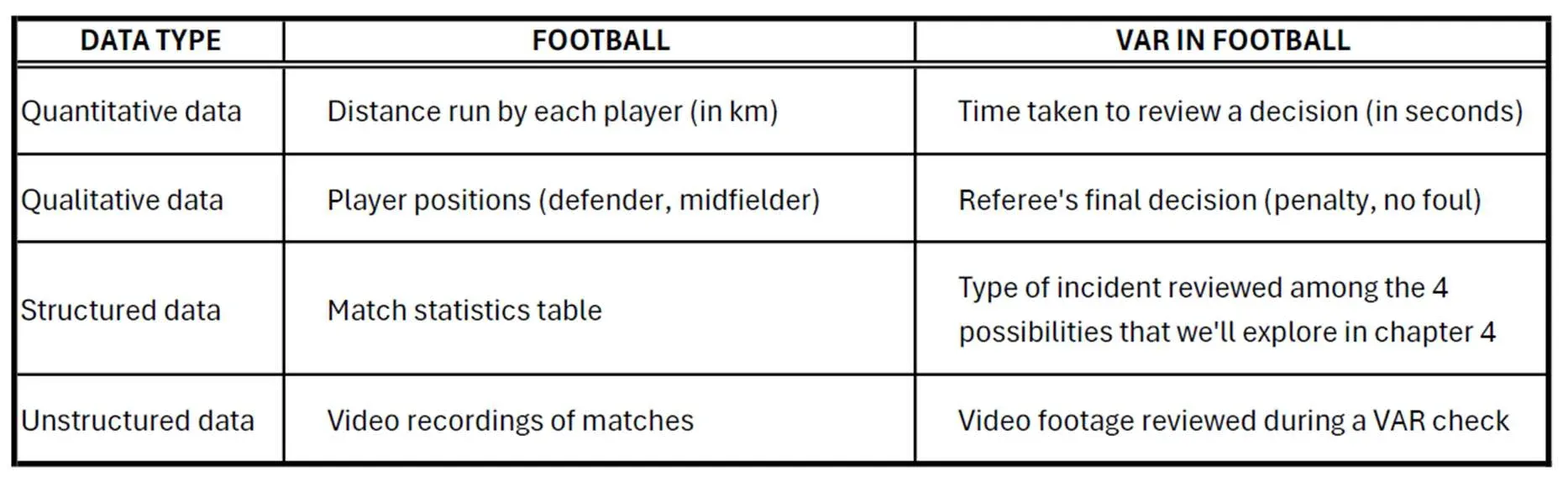
- Quantitative data: it consists of values that can be measured numerically;
- Qualitative data: it’s descriptive and non-numerical, capturing characteristics, concepts or experiences that numbers cannot measure;
- Structured data: it’s organized in a clear and defined format. It consists of both quantitative and qualitative data;
- Unstructured data: it lacks a strictly defined format and it often comes in complex forms such as text documents, images and videos. It also consists of both quantitative and qualitative data.
Figure 8 shows examples of different types of data collected in football and for the VAR system.
In sport officiating, all these different types of data are used.
Innovations such as cloud computing, wireless connectivity, wearable sensors and AI have expanded the scope of athlete monitoring on and beyond the field of play. Measuring a large quantity of variables on many athletes in different sports has created a data boom. Big data refers to extremely large and complex data sets that cannot be easily managed or analysed with traditional data processing tools, particularly spreadsheets such as Microsoft Excel. Big data has enabled the development of technologies, such as VAR in football, used to help referees and stewards in making the right call in situations that may be difficult to judge. Big data has four main characteristics known as the five V’s:
- Volume: the amount of storage that the data takes up;
- Velocity: the speed at which data is being created;
- Variety: the amount of sources used to create that data;
- Veracity: the accuracy of the data found, thus, how valuable it is;
- Variability: change in the meaning of data depending on the context.
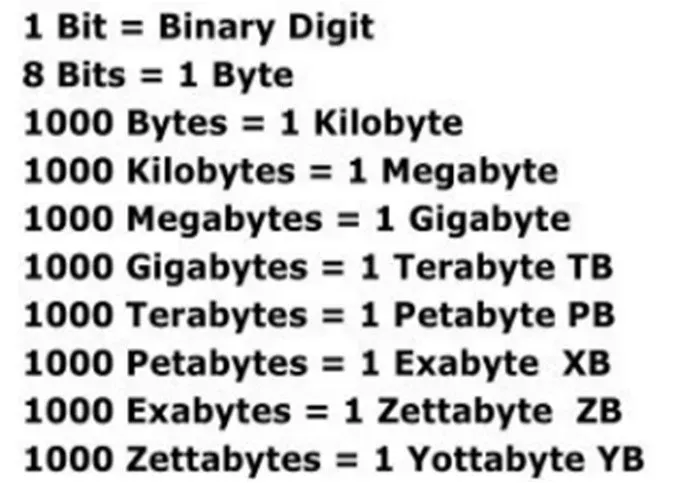
One of the primary challenges of big data management is the sheer volume of data generated. Data is produced at an unprecedented rate and managing this vast amount of data requires scalable infrastructure and the need to implement robust security measures. Data is the new petroleum of our age, 90% of the data in the world was created in the last two years and 80% of future data will be unstructured. The volume of digital data generated, stored and transmitted globally has moved from Exabytes to Zettabytes and then to Yottabytes. 180 Zettabytes is the amount of data generated, copied, consumed, captured globally is forecasted to reach by the end of 2025.
Figure 9 shows the volume of data.
Another challenge is represented by data range: it refers to the spread or interval covered by a set of data values, such as data from text to video and from audio to images. It’s important to verify the validity of data because users can easily manipulate it behind a computer screen. Data has to be accurate, clean and relevant in order to be correctly analysed and processed. Every time data is transferred between environments, a risk is created. It’s necessary to ensure that sensitive data isn’t exposed through unauthorized access, insecure communication channels and insufficient encryption mechanisms.
Big data isn’t simply a consequence of technological advancement, it has wider consequences as it requires proactive data management. Given the high expectations for accuracy from players, coaches, sporting organizations and spectators, decision-making is widely regarded as the most critical skill for sports officials. Their ability to make fast, fair and consistent judgments directly impacts the integrity and outcome of the game. Technology and data help the process of decision making, they don’t make the decisions; at the end of the day, it’s humans that are making these decisions. Data-driven is often used to describe letting the data do the talking: if the data says we go left, we go left. This is why we advocate for being data-informed rather than data-driven: use data to make informed decisions, not blindly take the results as face-value. In the case of multiple data points and a discrepancy between qualitative and quantitative data, the qualitative often proved to be more accurate as it can capture contexts and nuances that numbers alone may overlook. For example in a VAR review, even if tracking data shows a player slightly offside, the goal can still be allowed if the referee judges that a defender deliberately played the ball (for example, the defender tries to clear the ball, but mishits it and unintentionally plays it to the attacker) which demonstrates how qualitative interpretation can override quantitative data. Data can be used in decision making for officials, but it can also be used for:
- Talent recruitment: to identify and recruit the best players;
- Coaching and player development: to optimise game calls and help athletic executives to evaluate players for trades or drafts;
- Injury prevention and recovery: to analyse players’ workouts, biomechanics and medical histories to create personalised workouts and recovery plans;
- Game strategy: to scout opponents, develop game strategies and target areas for training;
- Athlete performance tracking and analysis: to improve an athlete’s game by identifying gaps and areas for improvement.
The integration of data in decision-making is reshaping the sport at every level, from the officiating to the training ground. By translating raw numbers into actionable insights, officers and teams can make faster, smarter and more objective decisions.
2.2 Real-time data processing system
To maintain the pace of the game, supporting decision technologies like VAR require real-time data processing. System integrators must implement cutting-edge software and hardware infrastructure to handle the enormous amounts of data that Internet of Things (IoT) devices generate.
Real-time data processing refers to the ability to collect, process and analyse data as it is generated. This means that data can be processed and made available for use almost instantly. Data in sport officiating is continuously generated and needs to be processed in real time; sport organizations must ensure that their systems can handle high-frequency data streams without sacrificing performance or reliability. This is where IoT plays a crucial role, it’s the network of physical objects or “things” embedded with electronics, software, sensors, and network connectivity, which enables these objects to collect and exchange data without the need for human-human or human-computer interaction; it creates opportunities for more direct integration between the physical world and computer-based systems. IoT has raised security concerns because it increases the attack surface as the number of connected devices grows: as more information is shared between devices, the potential for a hacker to steal confidential information increases; this is why security measures have to be applied. By integrating IoT with real-time data processing systems, this information can be instantly analysed and used to better inform officiating in decisions.
The key characteristics of a real-time data processing system are represented by:
- Immediate processing: data is processed as soon as it is received in order to make it available in real time. It enables quick insights and decisions based on the most recent available data;
- Low latency: it’s the time needed to process and consume data, minimizing the delay between data generation and insight extraction. High latency may lead to slow responses;
- Continuous data flow: it handles continuous streams of data from various sources, such as sensors and camera feeds;
- Scalability: scale efficiently in order to handle large volumes of data and spikes in traffic. When data volume rises, real-time data processing problems scale up, challenging the process. For example, globally available cloud-based architectures control high data without negatively impacting the system.
Figure 10 shows how response time (in milliseconds) changes as the scalability level increases.
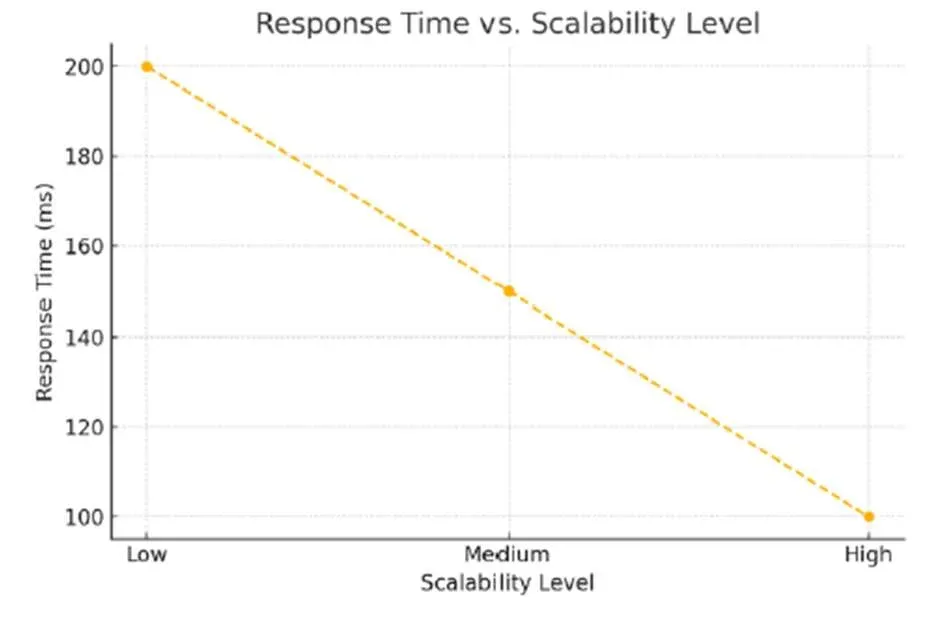
This graph suggests that improving scalability (for example, using modular and distributed architecture or implementing scalable storage solutions) leads to faster response times. The response time is the time interval from when the input arrives to when the output is generated in a system. As the scalability level increases, the response time decreases, which implies that a system is faster to respond when it’s more scalable; increasing scalability improves performance. Other characteristics of a real-time data processing system are:Complex systems: real-time data processing systems can grow enormously intricate with various elements like data intake, analysis, storage and even the application of AI models. Reducing the number of components while utilizing integrated platforms that combine these components into one, can help decrease system architecture complexity;
- Reliability and fault tolerance: ensuring that systems remain operational and that can recover quickly from failures by maintaining total data integrity;
- Integration: connecting real-time data processing systems with existing infrastructures and databases.
Real-time data processing systems are not the only ones in use today, there are also near real-time and batch processing systems, each serving different purposes depending on the application’s requirement. In the context of sport, the strength of real-time processing system lies in its ability to capture and deliver information instantly during a competition, for example enabling officials to make the most accurate judgments. Near real-time systems may be suitable when slights delays are acceptable, such as wearable fitness trackers during training, where data is synced to a coach’s dashboard every few seconds or minutes. Batch processing is often used to compile historical data and statistics for long term analysis, such as evaluating strategies and player performance over time. These three systems differ on multiple aspects, explored here below.
Figure 11 shows the different factors of the three main data processing systems.
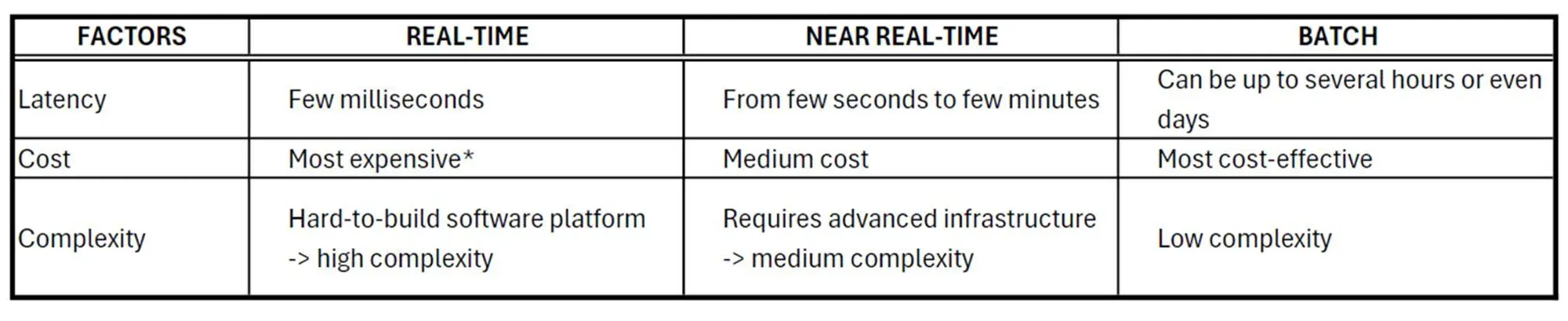
New advances in real-time and near real-time technologies are closing the gap in costs. Real-time processing can actually become cost-efficient at scale. Real-time data processing systems based on IoT devices involve several steps, which can vary in number or order based on system’s architecture and operational needs.
Figure 12 shows how such systems work.
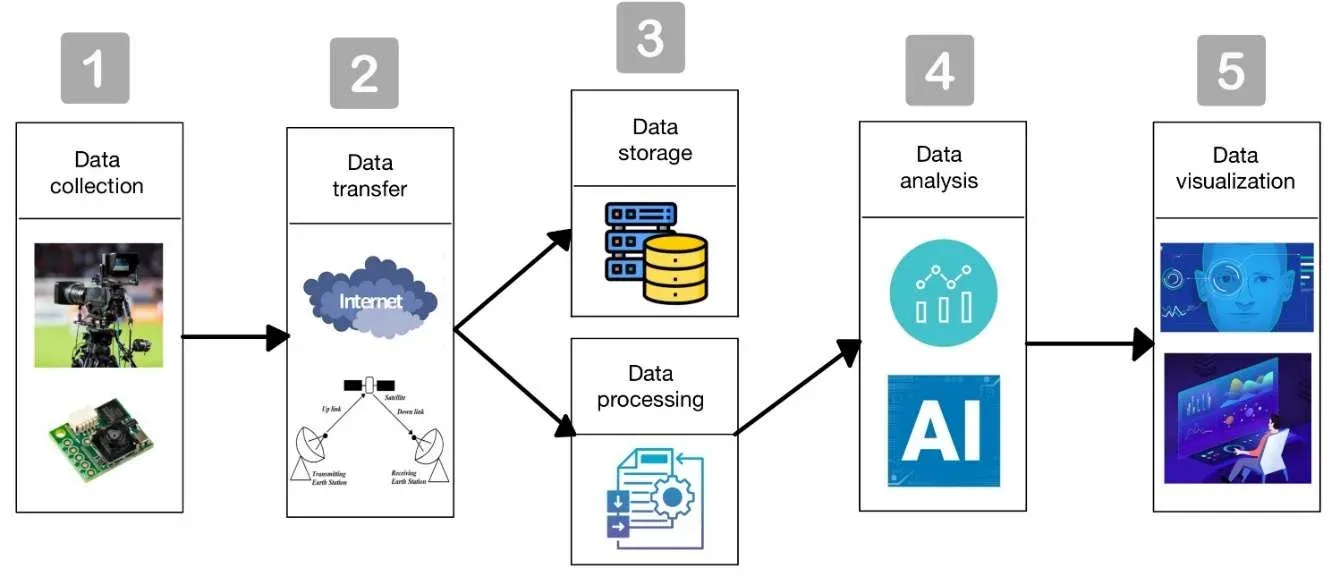
- Data collection: Collecting data in real-time from different sources such as IoT sensors, wearable technologies, records from multiple high-definition camera strategically placed around the pitch and optical tracking systems. They bring a continuous flow of structured or unstructured data, all of which needs to be managed by a robust system.
- Data transfer: IoT devices can communicate with one another through a network over the internet. These devices share sensor data by connecting to an IoT gateway, which acts as a central hub where they can send data. Satellite transmissions could be also adopted to transfer data; this step will be further examined and clarified in section 2.3.
3a) Data storage: Storages accumulate information collected in the first phase for further processing and analysis. Data is stored in a database that can be accessed and analysed at a later time or in a type of database known as in-memory database which is optimized for real-time processing. The most used data storage is the cloud. Cloud storage uses servers to save data, such as files, videos or images; data is collected in servers via internet connection, where it’s saved on a virtual machine on a physical server. Clouds offer data backup: production data can be separated from backup data, creating a gap between the two that protects organizations in case of a cyber threat. Cloud storage can be public or private: Public cloud storage is a model where an organization stores data in a service provider’s data centres that are also utilized by other companies. In this case, data is spread across multiple regions and it is often offered on a subscription (fixed recurring fee) or a pay-as-you-go basis (pay only for what you actually use, rather than paying a fixed amount upfront). Some of the biggest service providers are: AWS (Amazon), Google and IBM. On the other hand, private clouds can be divided in:
- On-premises private cloud: you can deploy your own resources in an internal data centre. You must purchase the resources, maintain, upgrade them and ensure security;
- Virtual private cloud: it’s a private cloud that you can deploy within a public cloud infrastructure. It guarantees the convenience and scalability of public cloud computing resources along with additional control and security.
The benefits of an on-premises private cloud compared to a public cloud can be found in:
- Security: data remains entirely within the organization’s infrastructure, reducing exposure to external threats;
- Flexibility: organizations can customize the infrastructure to fit specific requirements;
- Control: the organization retains full ownership of the hardware, software and data.
The private cloud model proves to be expensive over time because the infrastructure has to be maintained and managed: system software has to be up to date and it requires IT professionals to do so. In contrast, public cloud resources are much more affordable and cost-effective. Overall, cloud storage makes digital data immediately available; this enhances data processing, data analysis, the application of machine learning and AI to large datasets.
3b) Data processing: Once received, data undergoes processing to be formatted for use by other systems or applications. Extract-Transform-Load (ETL) tools are commonly used to process data in real-time. Data can be filtered, aggregated, enriched, customized and transformed to enhance its utility. Then it’s loaded to the systems where it will be analysed.
- Data analysis: Only relevant data coming from processing is used. Devices do most of the work without human intervention, although people can interact with them, setting them up, giving instructions or accessing the data. By training predictive models on historical data match, the system can anticipate potential scenarios notifying the officials, enhancing quick and accurate decision making. The use of AI and machine learning can make predictive decisions.
- Data visualization: Complex data can be displayed and simplified using visualisation tools to assist humans in the decision-making process. This enables to get immediate insights from data which are particularly valuable in dynamic environments such as officiating. At the application layer, the processed and analysed data is presented to officials in meaningful and user-friendly formats like dashboards, intuitive visuals and user-friendly graphics to quickly and effectively make informed data-driven decisions. It allows decision-makers to monitor different uncertain situations and respond quickly as they happen. To maximize the benefits of real-time processing, it’s important to focus on optimization and automation. This involves fine-tuning processing systems to reduce latency and improve scalability. Automated workflows can help streamline processes, reducing the need for manual intervention and ensuring that data is processed efficiently.
2.3 Transmission channels and network technologies
Data transfer is the process of moving digital information from one location to another. It involves transmitting data between devices or systems, enabling them to share information.
The most important considerations in data transfer are:
- Security: data could be intercepted by a third party, who could extract sensitive information or corrupt it;
- Reliability: data is delivered accurately, completely and in the correct order from sender to receiver without errors or losses;
- Efficiency: data transfer incurs in a cost in terms of resources like maintenance, hardware and energy usage. The goal is to avoid financial losses and enable cost-effective scaling as data volume grows;
- Latency: time delay between when data is sent from the source and when it is received at destination. The impact of latency can be mitigated with careful design and attention to infrastructure issues;
- Redundancy: creation of two or more copies of data during transfer to ensure data integrity and availability in case of losses or corruptions.
Data transfer can occur through various means such as wired networks and wireless transmissions; wired transmissions use physical cables to send data, while wireless transmissions send data through the air using signals, allowing a higher mobility but with potential interference and lower reliability. Wired connections often provide faster and more stable transmission compared to wireless connections, especially when transferring large amounts of data over long distances. The two most common data transfer methods are:
- Data transfer over point-to-point (P2P) dedicated network: it involves transferring data between two fixed locations directly, without passing through public infrastructure or shared nodes;
- Data transfer over the internet: it involves transmitting data packets between devices or networks using standard internet protocols like TCP/IP. TCP is responsible for transporting and routing data through the network architecture and ensuring it gets delivered to the destination application or device that IP has defined.
Data transfer over a P2P dedicated network ensures a higher security, lower-latency, higher-quality videos and allows to plan redundancy more accurately than over the internet, this is why it’s strongly adopted in sport officiating. The transmission systems that are now driving the evolution of data communication transmissions are represented by:
- Fiber optic (wired transmission) which is outdating Ethernet;
- Satellite transmission (wireless transmission).
These systems allow to transfer data P2P over the internet and also browse it. This is because, when we browse the internet, we are sending and receiving data packets (requests to websites, streaming, emails….); any type of digital information, such as video, voice and files, can be converted into data and transmitted with the systems previously mentioned. Since the early 1980s, the growth of the market for optical fiber transmission systems is without precedent. Nowadays, in sport officiating, most data transfers rely primarily on optical fiber systems (main system) while satellite is mostly used as backup; these backup systems provide redundancy, ensuring that data continues to flow without interruption in case the main connection fails.
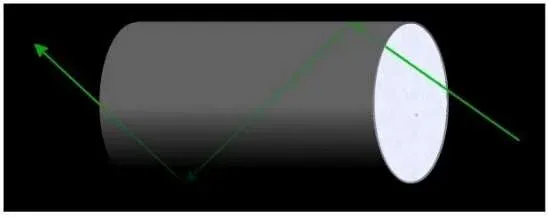
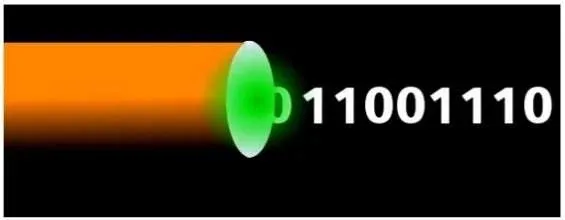
Fiber optic deals with lights propagation’s study through transparent dielectric waveguides and it’s used for the transmission of data from point-to-point location. It was first developed in the 1970s and it has revolutionized the telecommunications industry, playing a major role in the advent of information. Fiber is preferred over electrical cabling (Ethernet) when high bandwidth, long distance or immunity to electromagnetic interference are required. Optical fiber is a glass tube as thin as a human hair through which pulses of light travel; these pulses are simply digital information converted into binary code, a long sequence of 0s and 1s. Each 1 corresponds to a pulse of light while each 0 represents the absence of light. Fiber allows data to travel in both directions.
Figure 13 shows the propagation of lights. Figure 14 shows the sequence of 0s and 1s.
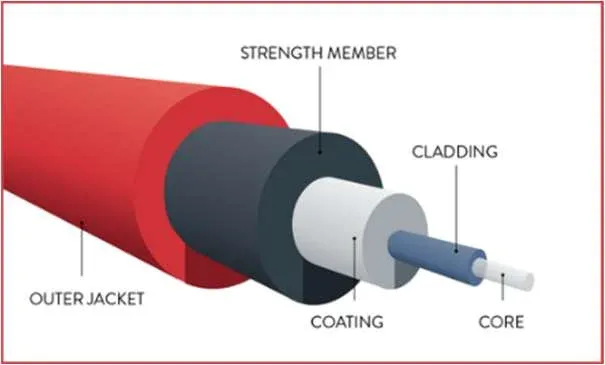
The main parts of an optical fiber are:
- Core: the central part made of glass where the light signal travels;
- Cladding: a layer of glass that surrounds the core and ensures that the signal travels efficiently over long distances;
- Coating: a plastic layer that protects the fiber from physical damages;
- Strength member/buffer: it prevents stretching and breaking during installation and operation;
- Jacket: it’s the outermost layer made of durable plastic and it protects all the internal components from environmental factors.
Figure 15 shows all the layers.
Optical fiber is typically laid under the roads using a machine equipped with a cutting wheel, which creates a mini-trench, usually 15cm wide and 35cm deep. Optical fiber also connects different continents: it’s laid under the seabed in shallow waters and on the seabed in deep waters using specially designed ships.
Figure 16 shows the creation of the mini-trench.

Figure 17 shows the pose of the fiber.

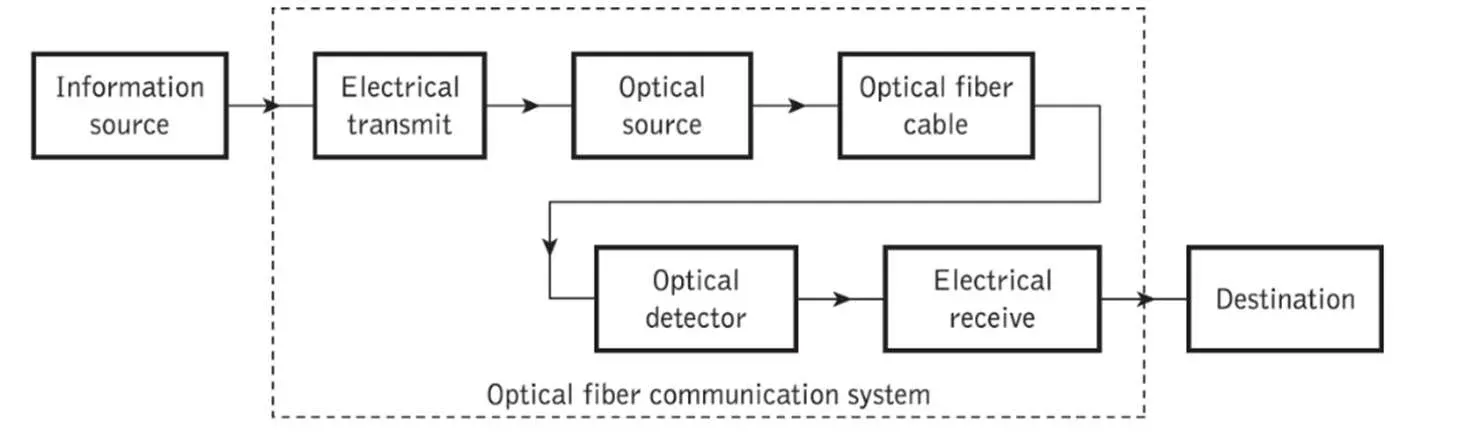
The optical fiber communication system is shown in figure 18.
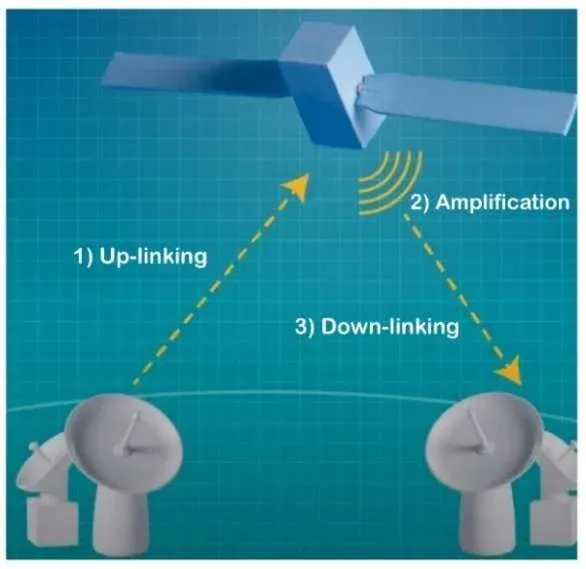
Satellite transmission has transformed the way we connect, enabling wireless communication across vast distances and making it possible to transmit signals globally, even to the most remote locations. Satellite communication is based on these steps:
- Up-linking: it involves sending signals from ground stations to the satellite;
- Amplification: the satellite amplifies the incoming signal;
- Down-linking: the satellites send the signals back to Earth. The signals are received by various stations that decode and distribute the data.
Figure 19 shows satellite transmission system.
Satellites can cover vast geographic areas, including remote and rural regions where terrestrial communication infrastructure is unavailable, making global communications feasible. It enables stable long-distance data transmission and connecting locations across continents and oceans without the need for complex terrestrial networks; in regions where installing cables is impractical or too costly, satellites provide a more economical solution for delivering communication services over large areas.
For remote support in officiating systems such as VAR, fiber optic communication is used far more extensively than satellite communication; satellite is typically reserved as a backup option in case any issues arise with the fiber connection.
In conclusion, fiber optic communication is ideal for real-time video officiating due to its low latency, high reliability and large bandwidth while satellite communication, though less optimal for live use, remains a valuable backup. Overreliance on fiber optic alone means that a sudden network outage could disrupt officiating operations and the continuity of live broadcast. Therefore, this redundancy is crucial because maintaining satellite links as a standby option ensures operational continuity and minimizes the risk of interruptions during critical moments.
3. Case study
I have decided to focus on one of the most debated innovations in modern football officiating which is the Video Assistant Referee (VAR) system, particularly its implementation in Serie A (the top professional football league in Italy). Since its introduction, the public opinion was sharply divided: on one hand, supporters view VAR as a powerful tool that enhances the fairness and accuracy of refereeing decisions and on the other hand, critics argue that it disrupts the flow of the game and that its interpretation can still lead to controversy. This polarized debate makes VAR a compelling case study for understanding how technology supported by data, AI and machine learning (ML) can transform decision-making processes in high-stake environments such as professional football. I also decided to implement the Jobs to Be Done theory in the analysis of this system; this theory was developed by Clayton Christensen, a professor in business administration at Harvard Business school. Applying this theory allows us to understand why Lega Serie A decided to “hire” the VAR system: to address the recurrent problem of incorrect or controversial refereeing decisions in critical match situations, increasing fairness and credibility of the competition. In the context of the Jobs To Be Done framework, the “job” of the VAR is to assist referees in making accurate and consistent decisions under high-pressure moments. This theory is explained in greater details in section 3.1.
3.1 Video Assistant Referee in Serie A
VAR is an officiating system that employs video review to help match officials enforce FIFA’s rules of the game; it was first trailed in the Netherlands league during the 2012-2013 season and officially introduced in Serie A in the 2017-2018 season. Fabio Caressa, an Italian journalist and commentator, claimed that the first unofficial use of VAR was already in 2006 during FIFA Word Cup final when Zinedine Zidane was expelled because he headbutted Materazzi; the on-field referees didn’t see Zidane doing that and cameras didn’t broadcast him. On 3 March 2018, International Football Association Board (IFAB) officially codified VAR into the laws of the game. VAR can be used in a match only in 4 situations:
- Goal or no goal decisions: when a goal isn’t confirmed because the referee isn’t sure if the ball has fully crossed the white line or because an incident occurred;
- Penalty kick: to evaluate whether or not to assign a penalty kick;
- Direct red card: when a player receives a direct red card and not a second yellow card because of a serious foul play, violent and offensive conduct or abusive actions;
- Mistaken identity: if the referee penalises the wrong player.
I had the great pleasure of interviewing Marcello Piselli and of visiting the Lega Serie A VAR system in Lissone. Marcello is the Broadcast Operations Manager at EI Towers, he oversees the coordination and execution of the broadcast activities to ensure a smooth, fast and high-quality content delivery. EI Towers’ goal is to consolidate its position as an independent and leading tower operator in Italy in the management of infrastructure for radio, TV and telecommunications. The company provides audio, video and data traffic management services, leveraging its own satellite and fiber optic network infrastructure; it operates a fiber optic backbone that extends over a route of more than 6.000 kilometres. The new International Broadcast Centre (IBC) of Lega Serie A is located since 2021 in a 2.400 square-meter building spread over two levels at the EI Towers headquarters in Lissone. It supports Lega Serie A by providing contribution and distribution services for audio, video and data signals both in Italy and worldwide for broadcasters and rights holders; it also features 10 centralized VAR rooms and one supervision room where referees and technical staff process images coming from the stadiums thanks to the connectivity provided by EI Towers’ infrastructure. As Marcello explained, they directly own the infrastructure and provide the VAR rooms to Serie A and their responsibility is to deliver the video and audio signal from the stadium to those rooms with minimal latency; on the other hand, the technical design of the room is carried out by another company called Hawk-Eye. To summarize, VAR isn’t placed in the stadium, but in Lissone inside the EI Towers building.
Figure 20 shows VAR room number 5 in the IBC. VAR rooms are known as Video Operation Room (VOR).
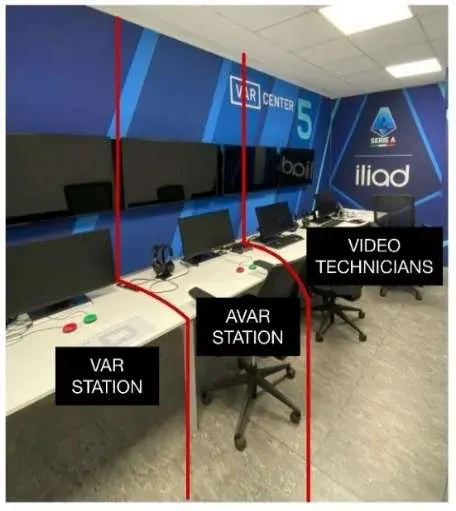
The VOR is composed of:
- Video Assistant referee (VAR): is a match official with independent access to match footage that may assist the on-field referee only in the event of a clear and obvious error or a serious missed incident in relation to the four categories of decisions outlined before;
- Assistant Video Assistant Referee (AVAR): is the assistant of the VAR;
- Two video technicians or replay operators: they see all the cameras coming from the field and select which cameras VAR and AVAR watch on their screens.
The VAR and the AVAR communicate to the on-field referee if a review is deemed necessary, but the on-field referee is the only person who can make the final decision; the VAR and AVAR can only assist him. There are no limits on VAR usage by match officials; however, players, coaches and team staff can’t request a VAR review.
The VAR and AVAR have 2 different buttons available:
- Green button: pressed when either official notices something potentially irregular during the game. After pressing it, the AVAR immediately begins analysing that specific situation while the VAR continues to watch the live action and only at its end he will review the irregular situation;
- Red button: even if the VAR and AVAR can always hear the on-filed referee, they can only speak to him by pressing the red button; this ensures communication is deliberate and controlled.
The Video Operation Room (VOR) has no windows to help the referees remain fully focused during the game; they must also wear their referee uniforms in order to get into the match mode. Marcello Piselli emphasized that since on-field referees are in the middle of the action, mistakes are tolerated only because they see the action once in real time; since in the VOR there’s more time to review footages from different angles, mistakes are seen as unacceptable. Because of this, referees in the VOR experience a higher level of tension, which may influence their job.
The VAR exemplifies how technology can assist referees, playing a crucial role in reducing errors and enhancing decision accuracy in football matches. To support this, researchers at Katholieke Universiteit Leuven in Belgium conducted a study analysing data from 2195 matches across 13 national football associations where VAR has been implemented. This study concluded that there were 9094 checks across all the matches; the referee’s initial decision was correct in 8376 of the 9094 clear situations, yielding a decision accuracy of 92,1%. After the intervention of the VAR, 8942 of 9094 situations were correct, yielding an accuracy rate of 98,3%. This shows a clear improvement in decision accuracy by implement the VAR system.
As defined by Christensen, a “job” is the progress an individual seeks in a given circumstance. For referees, their job is to make fair, accurate calls under pressure in high-stakes matches and in front of a demanding audience. The three dimensions of this job are:
- Functional: to improve accuracy and consistency of refereeing decisions;
- Emotional: to feel supported and confident in making calls;
- Social: to be perceived as fair and professional by the public.
These dimensions are what make the VAR system unique. Serie A, through its strategic partnership with EI Towers has deeply integrated around the job. This is mainly due to:
- Centralized infrastructure in Lissone: which receives and distributes all video signals from stadiums and ensures reliability;
- Consistent procedures: replay reviews, on-field monitor checks and communication processes are standardized.
The VAR system in Serie A is not just a technological add-on, it’s a solution “hired” to perform a multi-dimensional job under very specific circumstances; this makes it a unique system and gives significant value to the league in terms of credibility, public perception, professionalism, elevation of brand value and global appeal. Serie A has created an integrated system that reflects the core principles of Jobs To Be Done theory.
When Lega Serie A VAR was introduced in 2017 it was very slow; it wasn’t great from a fans’ perspective because the long wait killed the enjoyment. Lazio manager Simone Inzaghi complained most vociferously about the system, even suggesting that his side were ready to quit Serie A altogether in protest. Since the introduction of VAR in Serie A, Marcello and EI Towers have worked hard to support referees in making quick decisions, enabling them to receive images from the field just milliseconds after the action occurs while minimizing the risk of technical issues.
Figure 21 shows the basic workflow of Serie A VAR 2024-2025.
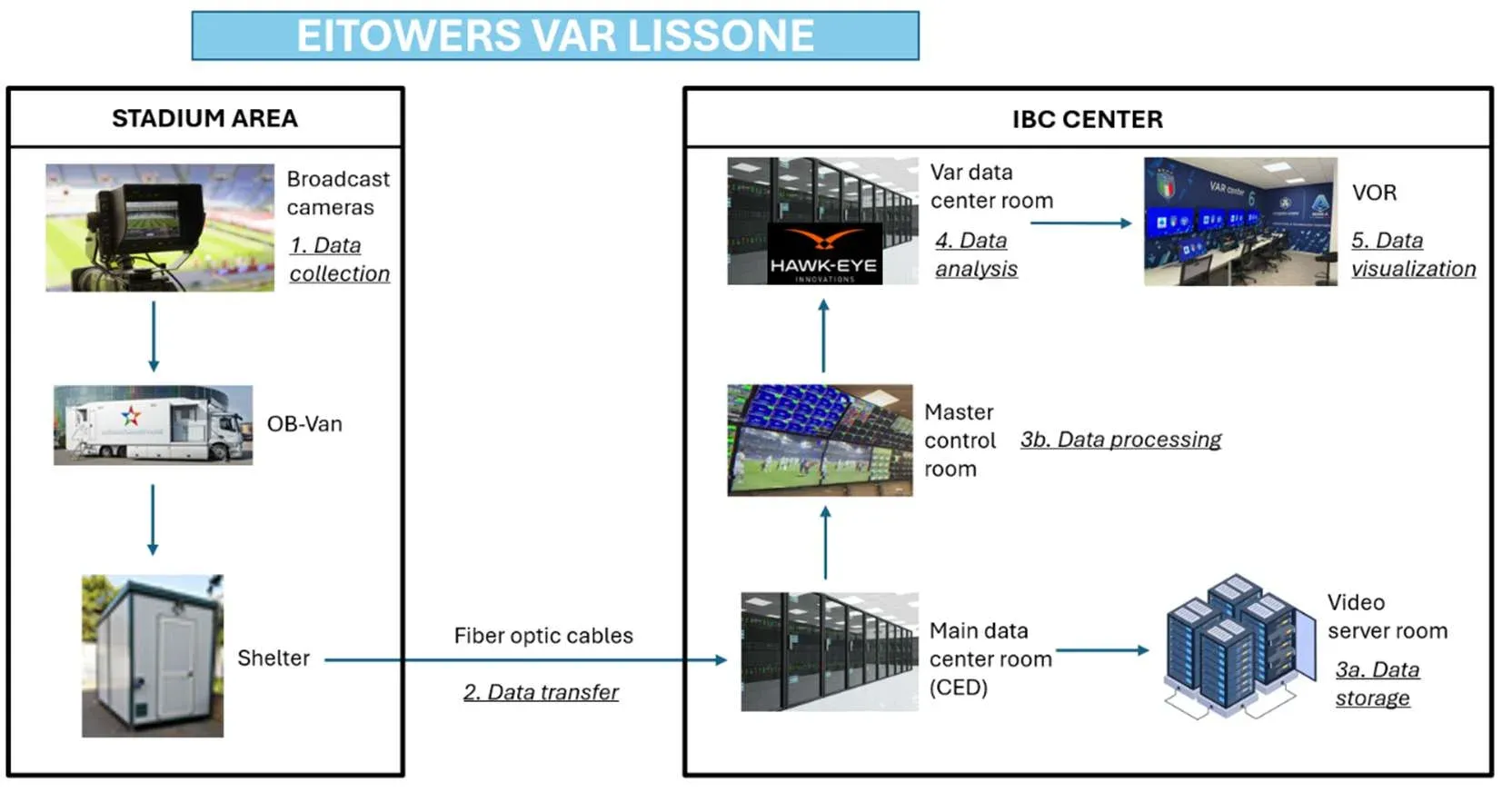
All of the cameras sent to the Video Operation Room (VOR) are the same as those used for broadcasting, except for few cameras installed exclusively for the Goal-Line Technology. These special cameras are used only by the system’s software to determine whether a goal has been scored goal; the referees in the VOR cannot view or control these cameras. Depending on the match importance, different production standards are applied. The highest standard is A + with 22+ broadcast cameras, then we have standard A with 20 broadcast cameras and standard B with 14 broadcast cameras. In any case, all the cameras positioned to cover the game must be made available to the VAR if a foreign broadcaster films a player during a match, any camera capturing the game must also be accessible to the VOR.
As we have seen before in the VAR system, VOR referees can press a red button to talk to the on-field referee. Their audio travels over the same fiber optic link as the video, which can carry multiple data types in both directions simultaneously.
All camera signals are sent to the OB-van, a truck specially equipped for TV broadcasting, where the producer selects which camera feeds (which refers to the transmission of audio, video or data from one source to another where it can be watched, listened or processed) to use for the live broadcast. The resulting output is known as the “program” signal; this program feed along with all individual camera feeds is then transmitted to the shelter, a portable cabin positioned next to the OB-van. This shelter serves as the starting point for all fiber optic transmissions toward Lissone. The shelter is portable because Serie A teams change each season: when a team is relegated, the shelter at its stadium is relocated in a newly promoted team stadium.
To transfer data from the stadiums to Lissone, EI Towers opted for a multi-optic fiber system. In Serie A, satellite transmission isn’t used due to the high number of signals involved (about 48 video signals). Transmitting this amount via satellite would require nearly 50 uplink trucks, which would be very expensive and would create a significantly higher latency compared to optical fiber. Since the 2021/2022 season, Serie B has also adopted the VAR system. In this case, due to the lower bandwidth requirement, EI Towers uses satellite transmission only as a backup. In Serie A, each video signal requires around 250 Mbps, meaning the total bandwidth needed is approximately 12 Gbps (250 Mbps × 48). This isn’t sustainable for satellite transmission while optical fiber can handle it with just a few milliseconds of latency due to the speed of light. When VAR was first introduced, a single fiber optic cable connected each stadium to Lissone; if that fiber experienced issues, both VAR and the live broadcast were disrupted since they relied on the same signal. To address this vulnerability issue, the system was upgraded: each stadium is now connected via two completely separate routes and along each route there are two dedicated fiber optic lines, each capable of handling up to 10 Gbps and more video signals together. To further ensure signal reliability, Marcello and EI Towers adopted the SMPTE 2022-7 standard.
Figure 22 shows stadium fiber links via two separate paths to Lissone.
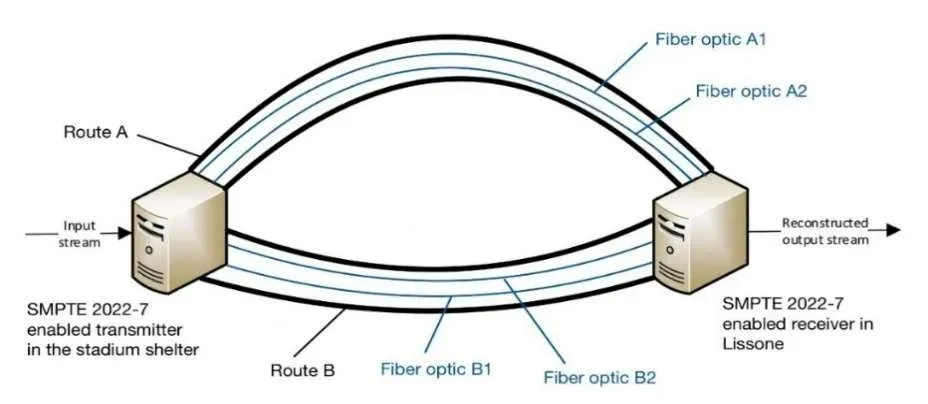
This standard enable seamless switching protection switching between redundant paths. SMPTE 2022-7 enabled transmitter duplicates the video and audio streams, sends them simultaneously over two different routes to the destination receiver. The receiver (also SMPTE 2022-7 enabled) combines the streams from both routes and reconstructs the original stream. If a packet was lost on route 1, the packet is taken from route 2; in case path 1 is completely gone, the entire stream is taken from path 2 and vice versa.
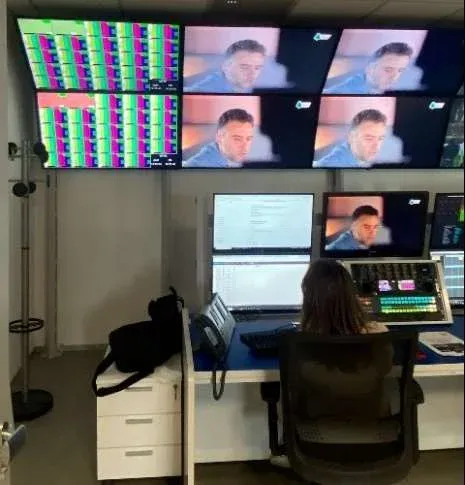
A critical room for EI Towers in Lissone is the Centro Elaborazione Dati (CED) or known as Data Centre. The CED room is organized in 5 different “islands”, each one with a specific role (for virtualization, graphics and commentary). Island 1 is where EI towers receives all the optical fiber signals coming from the Serie A and B stadiums. From there, the signals are routed to the adjacent building where the Master Control Room (MCR) is located and to the private video server room, where they are archived. The storage capacity of the video servers enables the creation of post-production highlights, allowing authorized editors (using accounts provided by EI Towers) to quickly access and assemble key moments from the match. Marcello underlined that they chose to use private servers instead of public ones (like AWS) in order to reduce costs. The MCR is the nerve centre where all the incoming signals are processed; it’s a crucial hub for EI Towers as it receives and monitors the video feeds from all the cameras and the program. It plays a central role not only in supporting VAR operations but also in managing signal distribution to international broadcasters.
Figure 23 shows the CED room.
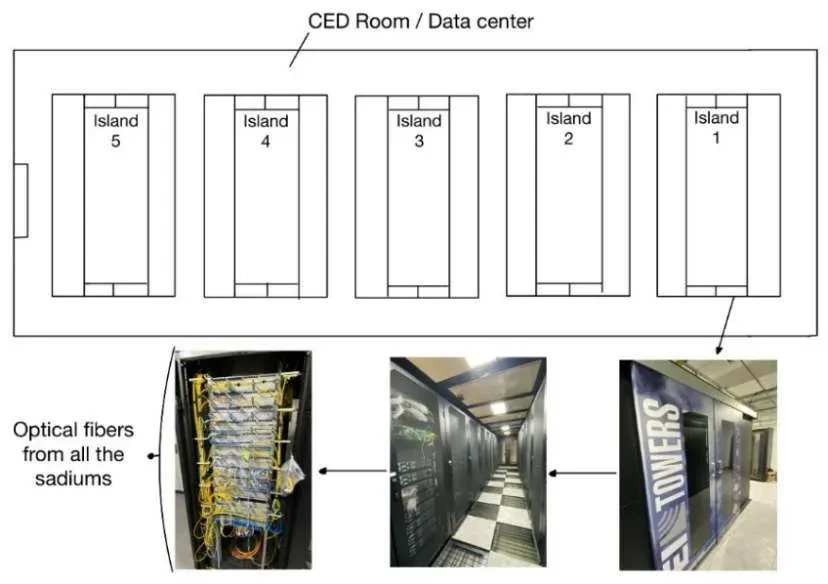
Figure 24 shows the MCR room.
Once processed in the MCR, the video signals are sent downstairs to the VAR Data Centre Room. EI Towers is responsible for ensuring that the signals reach this room correctly. From this point onward, it’s Hawk-Eye’s responsibility to transport the video feeds to the appropriate VAR room. Hawk-Eye is a company which is revolutionising sports with cutting-edge technology; they deliver precision tracking, immersive broadcast and flawless officiating services, enhancing fan experience worldwide. Using its proprietary software, Hawk-Eye performs data analysis and enables technologies, such as the Goal-Line Technology and Semi-Automated Offside, to function effectively. These two technologies use AI and ML tools to assist referees in making more informed, accurate and faster decisions:
- Goal-Line Technology (GLT): has been adopted since the VAR was introduced in Serie A in the 2017-2018 season, provides speedy and accurate decisions of whether the ball has fully crossed the goal line using UHD cameras to track it;
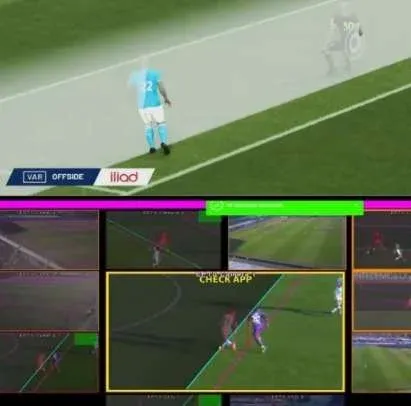
- Semi-Automated Offside Technology (SAOT): has been deployed from Serie A since 2022. It seamlessly integrates ball tracking and skeletal tracking using between 10 and 14 cameras positioned around the stadium to track 29 skeletal points on every player to determine offside positions within seconds. By minimising the time required for VAR-assisted offside calls, it significantly reduces game interruptions, enhances match flow and, most importantly, increases accuracy by eliminating human error.
Figure 25 shows the GLT technology.
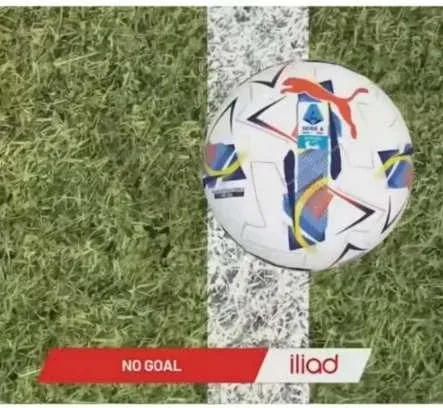
Figure 26 shows the SAOT technology.
The IBC at EI Towers is unique. Unlike other facilities that handle either VAR or TV broadcasting, the IBC manages both functions within a single integrated infrastructure with extremely low latency. In contrast to the VAR system, when the signal is intended for television broadcast, EI Towers performs additional processing, such as adding graphics, virtual advertising and commentary, which results in higher latency compared to the signal used for VAR. After being received in the MCR, camera 1 signal (which typically provides the main broadcast angle and covers around 90% of the match) is sent to a specialized area called the virtualization room; this is where virtual advertising is inserted onto the LED sidewalls visible in the stadium feed. This technology allows for region-specific sponsorships, meaning that different countries or continents can see tailored advertising during the same match; this greatly enhances commercial revenue potential as sponsors can target their messages based on geographic regions. After virtual sponsorships are added, the camera 1 modified signal goes back to the MCR. Then the program signal with the modified camera 1 is forwarded to the graphics room, located nearby; here, all the necessary graphics and visual overlays, such as scoreboard, timers, team logos, are added. Once the graphics are integrated, the signal is returned to the MCR. From there it’s sent to the commentary room, where international commentators add their voice-over. Once the commentary is complete, the final broadcast signal is distributed via fiber optic or satellite to both national and international broadcasters. These broadcasters then transmit the feed to viewers around the world.
Currently, EI Towers produces four distinct international feeds, customized by region: one for Italy, one for Europe, one for the Americas and one for Asia. All of these processing steps contribute to increasing latency, which is why the live broadcast we see on television or mobile devices typically has a delay ranging from 10 to 60 seconds. In contrast, the VAR room feed experiences only a minimal delay of a few milliseconds, as it uses a clean and unprocessed signal transmitted through a dedicated high-speed network. This sophisticated and fully integrated workflow makes the IBC at EI Towers not only a technical hub but also a strategic asset that enhances the quality, flexibility and commercial value of football broadcasting in Serie A.